
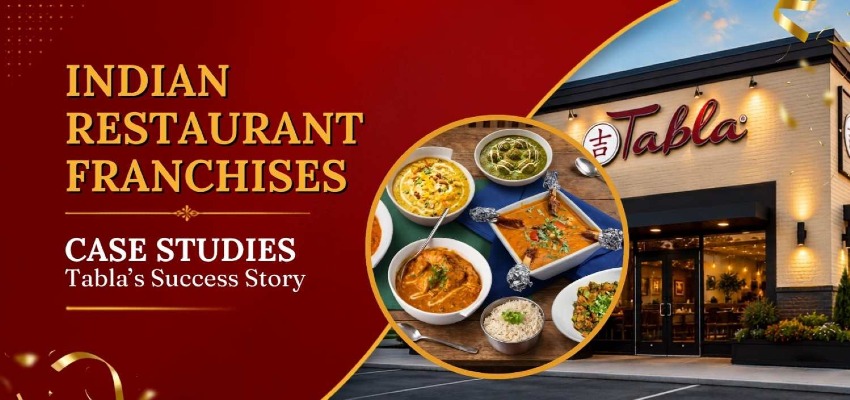
A restaurant case study helps entrepreneurs and investors understand how a restaurant business model is developed, operated, and scaled. It provides practical insight into the planning, systems, strategies, and operational decisions required to build a sustainable restaurant business while maintaining consistency across locations. For investors exploring the Indian restaurant industry, a detailed restaurant case study can also help them understand different restaurant formats and determine which model aligns with their investment goals and target market.
In this success story, we examine how Tabla has developed its franchise concepts across three formats: Fine Dining, Fast Casual, and QSR. Each format is designed around a recognizable brand experience, structured day-to-day operations, defined training systems, and ongoing franchise support. By looking at these approaches together, investors can better understand how a restaurant case study demonstrates the relationship between brand identity, operational consistency, customer experience, and scalable business practices.
Case Study 1: Fine Dining Restaurant Case Study
Fine Dining Restaurant
Business Challenge
A fine dining restaurant requires careful planning to create a premium experience that brings together quality cuisine, service standards, restaurant design, and operational efficiency. For entrepreneurs entering this segment, key priorities include creating an inviting atmosphere, establishing brand recognition in a new market, maintaining consistent food quality, and developing a trained team capable of delivering a polished guest experience.
Another important consideration is managing operational costs without compromising premium standards. A strong fine dining concept depends on structured processes that support restaurant setup, menu execution, customer service, and day-to-day operations.
Strategy Implemented
Tabla’s fine dining franchise model is built around a structured framework that helps franchise partners establish a restaurant concept with defined brand standards and operational support. The approach focuses on delivering a consistent dining experience while maintaining the identity and flavors associated with the Tabla brand.
Key elements include:
- Following established brand guidelines
- Creating a premium yet welcoming restaurant environment
- Maintaining consistent food preparation standards
- Establishing structured service processes
- Providing franchise training and operational guidance
- Supporting local marketing and brand awareness
This restaurant franchise case study demonstrates how a structured franchise system can help entrepreneurs enter the restaurant industry with established processes rather than developing every operational component from scratch.
Execution
The execution process prepares franchise partners for the different stages of operating a restaurant. It includes understanding brand expectations, preparing the restaurant, training team members, and implementing systems designed to maintain consistency.
Key execution areas include:
- Franchise onboarding and training
- Restaurant setup based on brand standards
- Team preparation and operational training
- Menu consistency and quality management
- Customer experience planning
- Continuous improvement through operational feedback
By following structured systems, franchise owners can focus on delivering a dining experience that reflects the brand’s positioning while adapting appropriately to their local market.
Results
A structured fine dining franchise framework can establish a strong foundation for restaurant operations. It supports operational consistency, a recognizable brand identity, and a more organized approach to managing daily restaurant activities.
The combination of brand standards, training, and operational support gives franchise partners a framework focused on quality, service, and long-term growth potential.
Key Takeaways
A successful fine dining setup depends on more than the food itself. Investors should consider the importance of:
- A recognizable restaurant brand
- Structured operational systems
- Effective training programs
- A consistent guest experience
- Ongoing franchise support
When these elements work together, entrepreneurs can focus on delivering a premium dining experience while benefiting from established business processes.
Case Study 2: Fast Casual Restaurant Case Study
Fast Casual Restaurant
Business Challenge
Fast casual restaurants operate in a segment where customers expect quality food, convenient access, and efficient service. Entrepreneurs entering this space need an operating model that keeps the business efficient while maintaining a clear culinary identity.
Important considerations include developing efficient workflows, maintaining food consistency, managing customer expectations, and creating a restaurant format that can adapt across different locations and market conditions.
A fast casual concept therefore needs systems that support speed and convenience without compromising food quality or brand reputation.
Strategy Implemented
Tabla’s fast casual franchise approach combines authentic Indian cuisine with an efficient restaurant format designed around modern dining preferences.
The strategy includes:
- Streamlined operational processes
- Consistent menu execution
- Efficient restaurant management
- A recognizable brand experience
- Franchise guidance and operational support
This restaurant success story shows how a franchise system can help entrepreneurs build a restaurant concept that combines convenience with a strong food identity.
Execution
Execution focuses on making restaurant operations, service, and food quality work together through clearly defined processes.
Key areas include:
- Understanding brand operating procedures
- Training restaurant teams
- Implementing reliable restaurant systems
- Maintaining consistent food preparation standards
- Supporting marketing and customer engagement
When structured processes are implemented effectively, franchise owners can manage daily operations with greater clarity while maintaining consistency across the restaurant.
Results
A structured fast casual model can provide franchise partners with operational benefits such as streamlined workflows, adaptable restaurant layouts, and consistent customer service processes.
It also provides entrepreneurs with a framework for serving different customer needs while maintaining established brand standards.
Key Learnings
A fast casual restaurant model highlights the importance of:
- Efficient operations
- Flexible restaurant formats
- Strong brand identity
- Consistent food quality
- Scalable business systems
Understanding these elements can help entrepreneurs evaluate franchise opportunities and plan for long-term restaurant growth.
Case Study 3: QSR/Express Franchise Case Study
QSR/Express Franchise
Business Challenge
Quick-service restaurant concepts require efficient operations, convenient service, and systems that deliver consistent customer experiences. Entrepreneurs entering this segment need a model focused on speed, simplicity, and operational effectiveness.
Key considerations include workflow efficiency, takeout and delivery support, menu consistency, and developing a format that can adapt to different market opportunities.
Strategy Implemented
Tabla’s QSR franchise approach focuses on an efficient restaurant model that prioritizes convenience, streamlined operations, and brand consistency.
It includes:
- Developing efficient restaurant processes
- Creating a format suited to quick-service operations
- Supporting consistent menu execution
- Providing franchise guidance
- Building a scalable restaurant framework
A QSR restaurant success story can help investors understand how organized systems support restaurant concepts designed around speed, convenience, and operational efficiency.
Execution
Execution involves implementing the systems required to operate a successful quick-service restaurant format while ensuring that daily processes remain consistent.
This includes:
- Franchise training and preparation
- Operational guidance and support
- Brand-standard implementation
- Menu and service consistency
- Support throughout restaurant development and opening
A well-planned QSR model allows franchise partners to focus on smooth operations while maintaining the quality and recognizability of the brand.
Results
A structured QSR approach can establish a foundation for efficient restaurant management, consistent customer experiences, and potential expansion.
By focusing on systems, workflows, and operational support, franchise partners can develop a business structure designed for long-term sustainability.
Key Learnings
A successful QSR model depends on:
- Operational efficiency
- Strong business systems
- Consistent execution
- Adaptable restaurant formats
- Reliable franchise support
Together, these factors help entrepreneurs understand how quick-service restaurant concepts can be structured for scalability.
Investor Takeaways from This Restaurant Success Story
Tabla’s franchise approach gives investors multiple restaurant formats to consider, allowing entrepreneurs to evaluate an opportunity based on their business objectives, franchise investment preferences, and local market conditions.
Proven Business Model
A structured franchise system provides entrepreneurs with established processes, brand guidelines, and operational frameworks that can support restaurant development.
Multiple Investment Options
Tabla offers Fine Dining, Fast Casual, and QSR franchise concepts, giving investors different formats to consider based on their goals and target markets.
Scalability
Multiple restaurant formats provide flexibility to address different locations, customer preferences, and market requirements.
Operational Support
Franchise owners receive guidance related to restaurant setup, training, operations, and brand standards, helping maintain consistency across locations.
Brand Equity
Operating under an established restaurant brand gives entrepreneurs a recognizable identity and a foundation for customer engagement.
Growth Opportunities
Different restaurant formats create opportunities for entrepreneurs interested in expanding within the Indian restaurant industry.
Long-Term Business Sustainability
Established systems, ongoing franchise support, and operational consistency can create a stronger foundation for sustainable restaurant growth.
What This Restaurant Case Study Shows
The biggest lesson from this restaurant success story is that franchise success depends on more than having popular cuisine or an attractive restaurant concept. A scalable franchise model requires consistent operations, effective training, recognizable branding, customer-focused service, and ongoing support.
Tabla’s Fine Dining, Fast Casual, and QSR formats demonstrate how different restaurant models can operate within one franchise system while maintaining consistent brand standards.
Frequently Asked Questions
Q.1 What role does marketing play in a Restaurant Case Study?
Marketing plays an important role in demonstrating how a restaurant builds local awareness, communicates its offerings, increases visibility, and engages customers. A structured marketing approach can support brand recognition and customer acquisition in individual markets.
Q.2 What can entrepreneurs learn from a restaurant success story?
Entrepreneurs can learn how operational efficiency, food consistency, branding, training, and scalable systems contribute to building a repeatable restaurant franchise model.
Q.3 What makes a fine dining restaurant case study valuable for franchise buyers?
A fine dining restaurant success story can help investors understand the importance of brand experience, service standards, food quality, restaurant operations, and structured franchise support.
Q.4 How does Tabla support franchise owners after opening their restaurant?
Tabla provides franchise owners with structured operational systems, training, guidance, brand standards, and ongoing resources designed to support consistent restaurant operations.
Q.5 How do Indian restaurant franchises become successful?
Indian restaurant franchises can build long-term success by combining quality cuisine with consistent operations, effective branding, strong customer experiences, and scalable business systems.
Q.6 Why is a restaurant case study useful for investors?
A restaurant case study gives prospective investors a clearer understanding of how different franchise formats can be structured, operated, and supported. It can help investors evaluate factors such as operational systems, training, brand positioning, scalability, and ongoing franchise support before making a business decision.
Q.7 How does Tabla support franchise owners after opening?
Tabla provides continued support focused on restaurant operations, training, brand standards, and business guidance. This ongoing support is designed to help franchise partners manage their restaurant business effectively and work toward long-term growth.

Vasu Kohli
Vasu is a food and hospitality writer passionate about showcasing Tabla Indian Restaurant's franchise journey and growth. Through insightful content, she highlights what makes Tabla a compelling franchise opportunity, covering its proven business model, scalable operations, authentic culinary systems, and successful expansion across multiple states. She also brings the brand's dining experience to life by sharing stories about Tabla's authentic Indian cuisine, signature dishes, warm hospitality, and memorable guest experiences, helping readers discover what makes every visit special.