Many Indian restaurants in the US have traditionally featured familiar North Indian dishes, including tandoori specialties and curries. More recently, some restaurants have expanded their menus to highlight regional Indian cuisines, street food, and Indo-Chinese specialties.
Indian cuisine in America is being formalised by franchising as that shift runs its course. This guide covers what the category data shows, which dishes carried the change, and how one brand structures three restaurant formats around it.
Quick Summary
Datassential counted 5,661 Indian restaurants and 2,222 Indian ghost kitchens in the US, and places Indian cuisine in America at the Adoption stage of its Menu Adoption Cycle with 30% consumer affinity. Census Bureau estimates reported by Pew Research Center put 5.2 million people identifying as Indian in the US in 2023. Tabla, operating since 2008, franchises three formats.
Indian Cuisine in America: What the Data Reveals
The customer base is both large and specific. Census Bureau estimates reported by Pew Research Center put 5.2 million people identifying as Indian in the United States in 2023, the second-largest Asian origin population in the country.
Restaurant supply is measurable too. Datassential's Firefly database counted 5,661 Indian restaurants nationally, and Datassential separately counted 2,222 Indian ghost kitchens serving the cuisine.
Consumer familiarity sits in a particular place. Datassential's FLAVOR consumer data reports that 30% of US consumers love or like Indian food, against 42% for Thai, while only 13% know ras malai, a milk-based dessert.
Datassential places Indian cuisine at the Adoption stage of its Menu Adoption Cycle, with Thai further along at Proliferation. Thai also has more storefronts, at 7,515 against Indian cuisine's 5,661, though Indian ghost kitchens outnumber Thai ones by 2,222 to 355.
How Indian Street Food Has Influenced American Menus
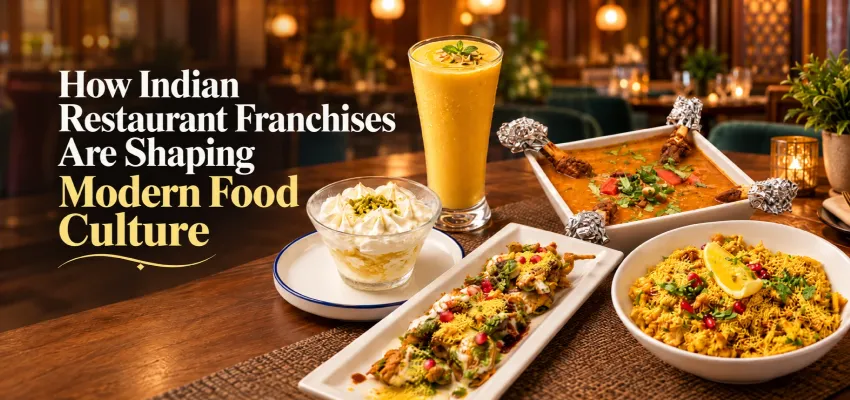
Indian street food is increasingly featured on US restaurant menus. Many dishes suit counter-service formats because ingredients can be prepared in advance and assembled to order, though cooking methods vary.
Food historians trace early forms of chaat to northern India, with accounts linking it to the 17th-century reign of Shah Jahan. The Manasollasa, a 12th-century Sanskrit encyclopedia, describes a dahi vada analogue called kshiravata, while K.T. Achaya traced references to dahi vada to around 500 BC. However, the story linking chaat to concerns about Yamuna water remains historical lore.
The origin of panipuri remains uncertain, with food writer Pushpesh Pant calling the question futile.
These street food dishes are increasingly appearing on US restaurant menus.
| Dish | What It Is | Origin |
| Chaat | A family of fried-dough snacks layered with yogurt, onion, coriander, sev and chaat masala | Most varieties trace to Uttar Pradesh |
| Vada pav | A deep-fried potato patty in chickpea batter, served in a pav roll with three chutneys and fried green chillies | Mumbai |
| Panipuri | Fried crisp shells filled with potato, chickpea and spices, dipped in spiced or sweet flavoured water | Not established in published sources |
| Samosa chaat | A broken samosa topped with green and sweet chutneys | Not stated in published sources |
| Dahi bhalla | Lentil dumplings in yogurt with tamarind chutney, chaat masala and onion | Lineage traced to the 12th-century Manasollasa |
Chaat
A family of fried-dough snacks that originated in India and is sold at roadside stalls across South Asia. Chaat encompasses a wide range of regional Indian snacks. Uttar Pradesh is associated with several well-known varieties, although the origins and development of individual dishes differ.
The named varieties differ by what carries the toppings:
- Sev puri, built on sev and other chaat toppings
- Raj kachori, a hollow wheat shell filled with sprouts, chickpeas, potatoes, bhalla and chutneys
- Ragda patties, potato patties served with a legume curry
- Basket chaat, an edible potato bowl filled with sprouts, chickpeas and chutneys, associated with Lucknow
Vada Pav
Vada pav is one of Mumbai's best-known street snacks. Ashok Vaidya is widely credited with popularizing the combination of potato vada, pav, and chutneys at a handcart near Dadar railway station during the 1960s. Some accounts separately trace the sale of batata vada in Mumbai restaurants to 1928, although this predates the commonly cited emergence of vada pav.
The pav bread is often associated with Portuguese culinary influence on India's western coast.
Vada pav's popularity is also linked to Mumbai's working-class history. Some accounts associate the growth of vada pav stalls with the economic disruption following the city's major textile mill strike in the early 1980s.
Chaat Masala
The spice blend that defines the category's flavour, combining amchoor, cumin and kala namak among others.
How Indo-Chinese Cuisine Gained Popularity in the USA
Indo-Chinese cuisine combines Chinese cooking techniques with Indian ingredients, seasonings, and flavors. Rooted in Kolkata’s Hakka Chinese community, it has evolved into a popular restaurant cuisine in India and abroad.
Popular Indian dishes such as Chilli Paneer, Hakka Noodles, Chilli Chicken, and Chicken Manchurian reflect this culinary tradition. Chicken Manchurian originated separately in Mumbai in 1975 and is credited to chef Nelson Wang.
Indian Schezwan cooking typically uses dried red chillies for heat rather than Sichuan peppercorns.
In the USA, Indo-Chinese dishes are often prepared to order in a wok, unlike North Indian gravies, which are typically prepared in stages before service.
Indian Food Trends Shaping Modern Restaurant Menus
Several Indian food trends are influencing restaurant operations, including off-premises dining, Indo-Chinese cuisine, and Indian street food in branded restaurant formats.
- Off-premises dining: It accounted for 83% of limited-service restaurant traffic in 2024, up from 76% in 2019. Delivery increased from 4% to 9%, drive-thru from 41% to 43%, while takeout remained at 31%.
- Indo-Chinese cuisine: Some Indian restaurants in the US serve Indo-Chinese dishes, expanding menu offerings while requiring different preparation techniques and kitchen workflows.
- Indian street food: Made-to-order street food can fit compact kitchen formats without requiring a full gravy line.
These trends highlight why restaurant formats should align with menu needs, kitchen operations, and investment goals.
From Food Culture to Franchise Opportunity
Datassential places Indian cuisine at the Adoption stage, behind Thai in consumer affinity and storefront count.
The International Franchise Association projects over 12,000 new franchised businesses and 150,000 additional jobs in 2026. However, restaurant operators face challenges, with 42% reporting unprofitability in 2025 and 60% experiencing declining customer traffic, according to the National Restaurant Association. Rising operating costs and staffing difficulties add to these concerns.
More than seven in ten consumers say they would visit restaurants more often if they had more disposable income.
For prospective franchisees, choosing the right restaurant format depends on location, investment, customer demand, and operating costs. Multi-format brands offer options to suit different business goals.
Tabla’s Restaurant Franchise Models
Tabla has operated since 2008, when its first restaurant opened in Orlando, Florida, with locations now across Florida, Texas, Illinois, Kentucky, Minnesota, Massachusetts and Ohio. It serves Indian, Indo-Chinese and Thai food and franchises three formats.
Tabla's published terms for each:
| Format | Initial Franchise Fee | Startup Investment, Estimated | Training |
| Fine Dining | $45,000 | $326K to $631K | 3 weeks |
| Fast Casual | $36,000 | $187K to $405K | 2 weeks |
| Express/QSR | $36,000 | $187,201 to $405,682 | 2 weeks |
Fine Dining Concept
Described by Tabla as premium Indian dining. The format carries bespoke seating arrangements for in-house fine dining, hosting up to 150 guests, with a full-service bar offered as an option alongside curated alcoholic and non-alcoholic beverages. Training runs three weeks, covering operations, team setup and guest service.
Fast Casual Concept
Tabla’s fast casual restaurant franchise combines quick service with a relaxed sit-down atmosphere, serving Indian cuisine and regional specialties from a chef-crafted menu. Designed for high-traffic neighborhoods and busy retail centers, the concept includes two weeks of training covering restaurant operations, team setup, and guest service.
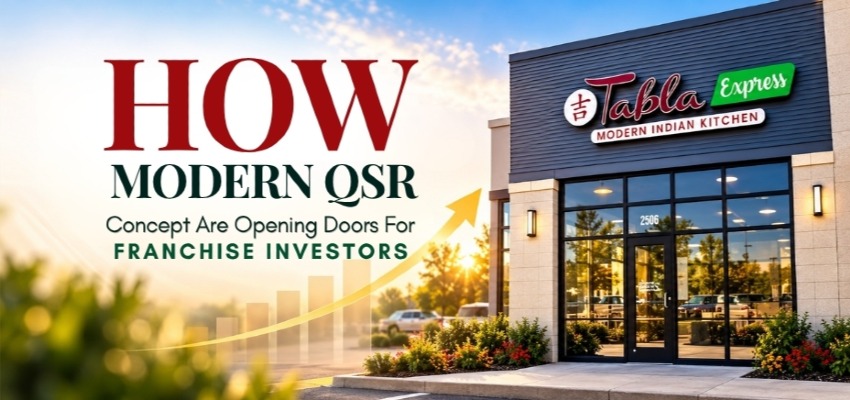
Express/QSR Concept
A compact format built around the top 20 best-selling Tabla menu items, freshly prepared in small batches. Tabla positions it for malls, food courts, airports and other high-traffic locations. Training runs two weeks, delivered hands-on and one-to-one before launch.
Site Selection and Technology
Tabla lists site selection among its support areas, and describes modern point-of-sale, inventory management and reservations software as part of the technology it provides.
Training and Standards
Onsite training before launch and staff training prior to opening, with standards in place to keep food quality and the customer experience consistent.
Marketing
A grand opening marketing campaign at launch, with brand-level and local marketing funded separately in the published fee schedule.
Ongoing Support
Tabla describes royalty funds as providing continued support, training and operational excellence, with ongoing performance analysis and proactive strategy adjustments.
The Published Fee Schedule
Tabla publishes one schedule of ongoing fees, each on its own stated basis:
- Royalty: 6% of gross sales, weekly
- Brand development: 2% of gross revenue, weekly
- Local advertising: 2% of gross revenue, monthly
- Technology fee: $750 or $1000 per month
Items 5 and 6 of the Franchise Disclosure Document are where to confirm the initial fee, every recurring charge, the basis each is calculated on and who receives it.
Tabla does not publish revenue or profit figures for any of its formats. Item 19 of the Franchise Disclosure Document is where a franchisor discloses any financial performance representation, making one is voluntary, and Item 20 carries the franchisee contact list.
What Indian Food Trends Mean for Food Lovers and Franchise Investors
For food lovers: Indian cuisine is expanding beyond familiar menus to include regional dishes and street food, each with its own history.
For franchise investors: Datassential places Indian cuisine at the Adoption stage, trailing Thai in consumer affinity and unit count. Meanwhile, the National Restaurant Association reports that 42% of restaurant operators were unprofitable in 2025.
These figures describe market trends and industry conditions, not guaranteed earnings for any individual restaurant or franchise.
Frequently Asked Questions About Indian Cuisine in America
Frequently Asked Questions
Everything you need to know — quick answers to the questions we hear most.
Q: How Popular Is Indian Food with American Diners?
Q: How Many Indian Restaurants Are There in the United States?
Q: Where Does the Cuisine Sit on Datassential's Menu Adoption Cycle?
Q: What Is Indian Street Food?
Q: Where Did Chaat Come From?
Q: What Is Vada Pav?
Q: What Is Indo-Chinese Food?
Q: Does Indo-Chinese Cooking Use Sichuan Pepper?
Q: Which Ordering Channel Grew Fastest in Limited-Service Restaurants?
Q: Is Opening an Indian Restaurant a Good Business Opportunity?
Q: What Does It Cost to Open a Tabla Franchise?
Q: How Do I Start a Franchise Conversation with Tabla?
Start the Conversation
The story of Indian cuisine in America is now as much about formats as flavours. Tabla has run restaurants since 2008, serves Indian, Indo-Chinese and Thai food, and franchises Fine Dining, Fast Casual and Express/QSR on one published fee schedule.
If you are weighing which of those three fits the capital and site available to you, that is the conversation to start. Submit a franchise inquiry at tablafranchise.com.

Vasu Kohli
Vasu is a food and hospitality writer passionate about showcasing Tabla Indian Restaurant's franchise journey and growth. Through insightful content, she highlights what makes Tabla a compelling franchise opportunity, covering its proven business model, scalable operations, authentic culinary systems, and successful expansion across multiple states. She also brings the brand's dining experience to life by sharing stories about Tabla's authentic Indian cuisine, signature dishes, warm hospitality, and memorable guest experiences, helping readers discover what makes every visit special.