

For most of the last decade, franchise growth in restaurants ran through the fastest formats, and a premium restaurant franchise was treated as the harder sell. The economics looked heavier, skilled labour looked scarcer, and off-premises channels looked like the growth story worth building for.
The 2026 industry data complicates that reading. This guide covers what defines premium dining as a format, what the published numbers say about full-service restaurants and operator conditions, and how one brand structures its Fine Dining model for franchise investors.
The National Restaurant Association projects $1.55 trillion in US restaurant and foodservice sales for 2026 on 1.3% real growth, while 42% of operators reported no profit in 2025.
The International Franchise Association's 2026 outlook says a focus on experiential dining may drive full-service restaurants to outpace quick-service brands in output growth. Tabla, operating since 2008, franchises a Fine Dining model.
What Makes Premium Dining Different?
Price is the output rather than the definition. A format sits in the premium tier because of four things it does that faster formats deliberately leave out, and each one adds cost and complexity before it adds anything else.
- Table service through the meal, which requires a front-of-house team and a service sequence to train them on.
- Cooking that cannot be shortened. Gravies built in stages, slow-cooked rice, breads fired to order.
- A beverage programme, which brings licensing, inventory, storage and staff training of its own.
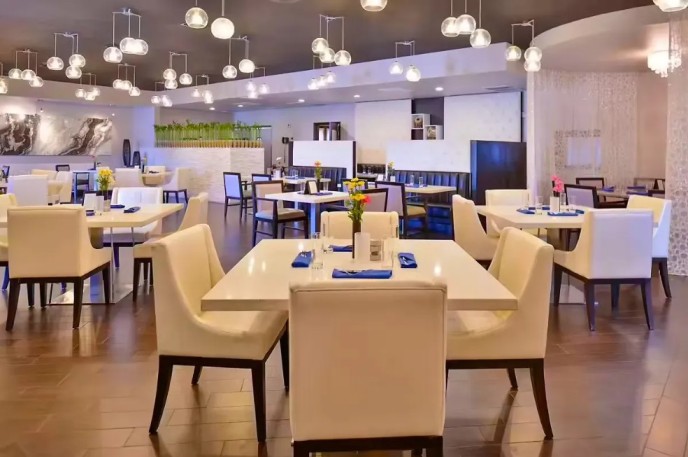
- A dining room built for long visits, since the guest is paying for time at the table rather than speed away from it.
Those are the defining features rather than a ranked list of advantages. Remove any one of them and the format becomes something other than premium.
Each also carries a training requirement rather than only a capital one. A service sequence has to be taught, a beverage list has to be known by the people selling it, and a staged gravy has to be judged by eye rather than by timer.
Essential Cooking Techniques Used in Premium Restaurants
Three techniques account for much of the labour in a premium Indian kitchen, and none of them can be compressed without changing the dish.
Bhuna
Cooking onions, tomatoes and spices in oil until the oil separates and rises. This is where the base flavour of most North Indian gravies is made, and shortening it makes the dish taste thin.
Dum
Sealing a pot with dough so the contents cook in trapped steam. Hyderabadi biryani depends on it, and it sets how far ahead a kitchen can batch that dish.
Tandoor Cooking
A clay oven that can reach around 480°C. Breads are pressed against the inner wall and meats are skewered and cooked in the cavity, producing a char and interior moisture a conventional oven does not replicate.
Regional Flavours That Shape a Premium Indian Menu
Regional structure is what separates a deep menu from a generic one, because the flavour base changes completely between cooking traditions. This is how the main traditions on an Indian menu differ.
| Cooking Tradition | Flavour Base | Signature Dishes |
| North India (Punjab, Delhi) | Dairy, wheat, tandoor cooking, garam masala | Butter chicken, dal makhani, naan, tandoori chicken |
| South India (Tamil Nadu, Karnataka) | Rice, lentils, coconut, curry leaf, tamarind, roasted dry spice | Dosa, idli, sambar, Chettinad curries |
| Goa and the Konkan coast | Coconut milk, kokum, vinegar, garlic, red chilli | Fish curry, Goan vindaloo |
| Kerala | Coconut, curry leaf, black pepper, fermented rice batters | Appam, Malabar fish curry |
| Hyderabad and the Deccan | Saffron, fried onion, yoghurt, tamarind, peanut | Hyderabadi dum biryani, mirchi ka salan |
| Indo-Chinese | Soy, vinegar, dried red chilli, ginger, garlic | Chilli paneer, Hakka noodles, Manchurian |
Menu literacy is lower than the category's spread suggests. Datassential found that only 13% of US consumers know ras malai, a milk-based dessert, according to its FLAVOR consumer data.
Indian Cuisine’s Position in the US Restaurant Market
A modern restaurant concept needs a category with established demand and room left in it. Two measures describe where Indian food currently sits.
Datassential places Indian cuisine in Adoption, the second of the four stages in its Menu Adoption Cycle, and reports that 30% of US consumers say they love or like Indian food. Adoption is the stage where a cuisine spreads through independents and lower price points, ahead of broad mainstream-chain presence.
The population base behind that is substantial. Census Bureau estimates reported by Pew Research Center put 5.2 million people identifying as Indian in the United States in 2023, the second-largest Asian origin population in the country.
Supply has not caught up with either figure. Datassential's Firefly database counted 5,661 Indian restaurants nationally, a modest number against a country of more than a million restaurant and foodservice outlets.
Key Insights from the 2026 US Restaurant Industry Data
The headline numbers describe a very large industry growing slowly. The National Restaurant Association projects total US restaurant and foodservice sales of $1.55 trillion in 2026, with real sales growth of 1.3% and employment reaching 15.8 million jobs as operators add more than 100,000 of them.
Conditions underneath are hard, and the unflattering figures belong in front of anyone evaluating this category. In 2025, 42% of operators reported their restaurant was not profitable and 60% reported softer customer traffic, while more than nine in ten named food, labour, insurance, energy and swipe fees as significant challenges.
Two findings bear directly on the premium end.
- Skilled staffing is the pressure point. Nearly three quarters of operators plan to hire in 2026, but many expect difficulty finding experienced managers and chefs.
- Off-premises has moved the two segments differently. Comparing against 2019, 58% of limited-service operators say off-premises accounts for a larger share of their sales, against 41% of full-service operators, per the National Restaurant Association's off-premises research.
Demand is not the reported constraint. More than seven in ten consumers say they would use restaurants more often if they had more disposable income.
How Dining Trends Create Franchise Opportunities
The clearest signal for the premium end comes from the franchise data rather than the restaurant data. The International Franchise Association's 2026 Franchising Economic Outlook states that a focus on experiential dining, rather than value alone, may drive full-service restaurants to outpace quick-service brands in output growth.
Franchising itself continues to expand. That outlook projects more than 12,000 new franchised businesses in 2026 and more than 150,000 added jobs, taking franchise employment to nearly 8.9 million, with total franchise GDP rising from $549.9 billion to $558.4 billion.
Read together, those two points describe an opening and a problem in the same breath. If experiential dining is where the output growth may come from, the format that delivers it is also the one the hiring data says is hardest to staff.
That is the gap a franchise system is built to close. What an investor at this tier is buying is a trained process for the parts of a premium restaurant that are hardest to repeat, which means the kitchen standard, the service sequence and the opening itself.
Comparing Restaurant Franchise Models and Formats
Investment, labour and site requirements move together across the tiers. This compares the three on service model and the kind of location each is typically built for.
| Model | Service | Typically Sited In |
| Premium / Fine Dining | Full table service, beverage programme, multi-course menu | Destination locations rather than host sites |
| Fast casual | Counter ordering with table delivery, full menu | Lifestyle centres and mixed-use developments |
| Express / QSR | Counter or grab-and-go service, compact menu | Malls, food courts, airports and other high-traffic sites |
A premium restaurant franchise is the heaviest of the three on capital and on training. That is the trade at the centre of the decision.
Tabla's Fine Dining Model
Tabla has operated since 2008, when its first restaurant opened in Orlando, Florida, with locations now across Florida, Texas, Illinois, Kentucky, Minnesota and Massachusetts. It franchises three formats, and Fine Dining is the one it describes as a premium dining concept.
Tabla's published terms for the Fine Dining model:
- Initial franchise fee: $45,000
- Startup investment, estimated: $326K to $631K
- Training: three weeks of comprehensive training covering operations, team setup and guest service
- Seating: bespoke seating arrangements for in-house fine dining, hosting up to 150 guests
- Bar: a full-service bar is offered as an option, alongside curated alcoholic and non-alcoholic beverages
The menu spans Indian, Chinese and Thai flavours with modern fusion dishes, built as chef-crafted menus on standardised recipes.
Tabla also describes a hybrid concept combining the sophistication of fine dining with the efficiency and accessibility of fast casual service.
Site Selection and Restaurant Design
Tabla lists site selection and restaurant design among its support areas, with build-out assistance covering design, construction, equipment and pre-opening preparation.
Training
Three weeks of comprehensive training covering operations, team setup and guest service. Tabla separately lists training in operations, culinary standards, guest service and management systems.
Given what the 2026 hiring data says about finding experienced chefs and managers, the training system is the part of a premium franchise offer worth examining most closely.
Marketing
National and local marketing support, including marketing for the grand opening and a launch campaign. Tabla's published fee schedule funds brand-level and local marketing separately.
Launch and Ongoing Operations
Onsite support through launch and grand opening assistance, then ongoing operational support, with technology-driven operations across the system.
The Published Fee Schedule
Tabla publishes one schedule of ongoing fees, each on its own stated basis:
- Royalty: 6% of gross sales, weekly
- Brand development: 2% of gross revenue, weekly
- Local advertising: 2% of gross revenue, monthly
- Technology fee: $500 or $750 per month
The royalty and brand development contribution are the two paid to the franchisor. Items 5 and 6 of the Franchise Disclosure Document are where to confirm the initial fee, every recurring charge and the basis each is calculated on.
Tabla does not publish revenue or profit figures for any of its formats. Item 19 of the Franchise Disclosure Document is where a franchisor discloses any financial performance representation, making one is voluntary, and Item 20 carries the franchisee contact list.
What This Means for Readers and Investors
For Readers Researching the Category: Premium dining is defined by its service style, cooking methods, beverage offerings, and dining environment—not just higher prices. These features also increase staffing, training, and operating costs.
For Potential Investors: Fine dining generally requires more upfront investment and skilled staff than counter-service formats. In 2025, 42% of restaurant operators reported that their businesses were not profitable.
The IFA’s 2026 outlook identifies experiential dining as a potential growth driver for full-service restaurants, but this does not guarantee success for any individual franchise.
These figures provide industry context, not earnings predictions. Actual restaurant performance depends on factors such as location, operating costs, customer demand, and management.
Frequently Asked Questions About a Premium Restaurant Franchise
Frequently Asked Questions
Everything you need to know — quick answers to the questions we hear most.
Q: What Is a Premium Restaurant Franchise?
Q: What Makes a Restaurant Premium?
Q: Is the Restaurant Industry Profitable?
Q: Is Full-Service Dining Expected to Grow Faster Than Quick Service?
Q: What Is the Biggest Staffing Challenge for Premium Restaurants?
Q: How Has Off-Premises Dining Affected Full-Service Restaurants?
Q: What Is Dum Cooking in Indian Cuisine?
Q: How Much Does a Tabla Fine Dining Franchise Cost?
Q: What Are Tabla's Ongoing Franchise Fees?
Q: What Training and Support Does Tabla Provide?
Q: How Can I Inquire About a Tabla Franchise?
Start the Conversation
A premium restaurant franchise requires a higher initial investment and more extensive training than counter-service formats. Since 2008, Tabla has built its restaurant business and now offers a Fine Dining franchise model with a $45,000 initial franchise fee, an estimated startup investment of $326,331 to $631,211, three weeks of training, and support covering site selection, restaurant setup, launch, and ongoing operations.
If you are considering a premium restaurant franchise, explore Tabla’s franchise investment requirements and support system to determine whether the model aligns with your budget.

Vasu Kohli
Vasu is a food and hospitality writer passionate about showcasing Tabla Indian Restaurant's franchise journey and growth. Through insightful content, she highlights what makes Tabla a compelling franchise opportunity, covering its proven business model, scalable operations, authentic culinary systems, and successful expansion across multiple states. She also brings the brand's dining experience to life by sharing stories about Tabla's authentic Indian cuisine, signature dishes, warm hospitality, and memorable guest experiences, helping readers discover what makes every visit special.