

How Indian QSR Franchises Are Transforming the Global Food Industry
Fifteen years ago, few investors were looking at Indian cuisine as a franchise category. Today, it's one of the sectors drawing the most serious attention in the food service industry, and the reasons have everything to do with the business model, not a comparison to burgers and fries.
The QSR franchise structure has proven itself across nearly every cuisine category that's tried it, lower overhead, faster unit economics, and a format that scales without requiring a new playbook for every location. Indian food was simply underrepresented in that space for years. That gap is closing fast, and the operators moving into it early are the ones defining what the category looks like next.
Understanding the Indian QSR Franchise Business Model
For a prospective franchise, the appeal of an Indian QSR starts with what it removes from the equation. There is no sprawling dining room to staff, no lengthy prep windows built around multi course service and no menu so extensive that it needs its own training manual.
The model actually runs on a tight, standardized menu featuring dishes engineered to hold their quality through prep, hold time, and delivery without needing a chef's intuition behind every plate.
That standardization is what makes the franchise model possible in the first place. A full-service restaurant depends heavily on the person running the kitchen. A well-built QSR system depends on the process, which is exactly what makes it repeatable across markets and exactly what an investor is buying into when they sign on.
Why are QSR Restaurant Franchise Models Dominating the Market?
Scale is the number that matters most to anyone evaluating this category. A QSR restaurant franchise carries a smaller real estate footprint as compared to that of a full-service concept. This way you will encounter lower build out costs and a shorter runway to open.
It is led by a simplified menu where you will encounter tighter inventory management and less waste to account for in the P&L. Further, it is aided by higher counter turnover, so more transactions are moving through the same square footage over the course of a day.
Delivery and third-party pickup extend that footprint without requiring additional square feet or additional front of house staff. For an investor comparing formats that are a combination of Lure fixed costs, faster throughput and a built-in digital revenue challenge, QSR serves as the capital choice, particularly for Indian cuisine.
Key Benefits of Investing in an Indian QSR Franchise
Franchising exists to hand an investor into a system that's already been tested; consequently, the guesswork of year one is someone else's problem to have already solved.
With an Established Indian QSR Franchise, that System Typically Includes:
- A menu already validated against real customer demand, not built from scratch
- Recipes and spice programs standardized for consistency, so quality doesn't hinge on any one hire
- Site selection and buildout support from a team that has opened locations before
- Brand recognition and marketing infrastructure the franchisee doesn't have to build alone
- Operational playbooks covering vendor relationships, staff training, and day-to-day systems
Lower overhead and faster training cycles generally support a shorter path to profitability than a full-service concept requires. Actual timelines vary by market, location, and execution, and are worth discussing directly with the franchise development team before finalizing any projections.
Food Express Franchise: The Future of Fast-Casual Indian Dining
The food express format sits between a food truck and a full-service restaurant, and it's where a meaningful share of the category's investor interest is concentrated right now.
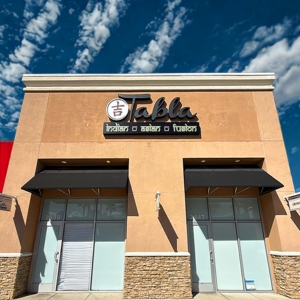
Tabla Express was built around that format specifically; the same tandoor-fired standards and spice program Tabla has run since 2008, reshaped into a leaner operating model with a smaller footprint and a faster path to open.
For a franchisee, that means inheriting nearly two decades of brand development and recipe refinement, all without taking on the operational complexity of a full-service dining room.
Emerging Trends Shaping the Indian QSR Franchise Industry
For an investor evaluating this space, the operational trends matter as much as the food does.
Digital ordering and loyalty platforms are no longer optional infrastructure; rather, they're baseline expectations that affect a location's day-one revenue potential. Cloud kitchens are lowering the cost of testing a new market, since an operator can validate demand before committing to a full storefront buildout.
Delivery-first kitchen layouts are changing what a location even needs to look like, with prep stations designed around packaging and turnaround speed rather than dine-in service.
Franchise systems that have already built these capabilities into their operating model save a new franchisee from having to figure it out independently, and that's a meaningful part of what a brand's infrastructure is worth.
Challenges and Opportunities in the QSR Restaurant Franchise Market
No franchise category is without friction, and Indian QSR is no exception. Labor costs continue to climb across the industry. Real estate in high-traffic markets comes at a premium. Sourcing authentic Indian ingredients requires vendor relationships that take time to establish, which is precisely why an established brand's existing supply chain carries real value for an incoming franchisee.
The opportunity side of that ledger is significant. Indian cuisine remains underrepresented relative to its overall popularity, which means less saturation in many markets than an investor would find in more established QSR categories. For an operator willing to work through the early logistics, that's a runway for most competing categories no longer offer.
The Future Outlook of Food Express Franchise and Indian QSR Growth
The next several years point toward a structural shift in how Indian food reaches the market, not a temporary trend.
Fast-casual formats are expected to keep gaining share from full-service ones industry-wide. Delivery is expected to keep growing as a percentage of total transactions. The food express model, which is lean, fast, and built for consistency, is positioned to capture a meaningful share of that growth as more markets recognize the demand that's already there.
For Tabla, that outlook shapes continued investment in formats like Tabla Express, built on a foundation that's already earned recognition, including Best Indian Restaurant honors from the Orlando Sentinel three years running. That recognition came from the full-service side of the brand. The opportunity now in front of investors is bringing that same standard into a format designed to scale.
FAQs
What are the Main Features of a QSR Model?
A streamlined menu, fast service, counter or drive-thru ordering, and a smaller kitchen footprint, which are all factors that directly affect a franchisee's buildout costs and staffing needs.
Why is the QSR Model so Popular?
It offers a more efficient cost structure than full-service formats: lower overhead, faster throughput, and a business model built to scale across multiple locations.
What types of Businesses use the QSR Model?
Fast-food chains, fast-casual concepts, coffee shops, and a growing number of ethnic cuisine categories, with Indian food express franchises among them.
Is the QSR Model Profitable?
Lower overhead and faster turnover generally support stronger margins than full-service formats, though actual profitability depends on market, location, and operational execution.
What is the Future of the QSR Model?
Continued growth driven by digital ordering, delivery infrastructure, and cloud kitchens, with underrepresented cuisine categories like Indian food positioned for outsized gains.
What is a Food Express Franchise?
A fast-casual model that pairs QSR-level speed and cost efficiency with a menu built for genuine flavor and consistency, which is the format behind concepts like Tabla Express.

Vasu Kholi
Vasu is a food and hospitality writer passionate about sharing the stories behind Tabla Indian Restaurant. Through engaging content, she highlights Tabla's authentic Indian cuisine, unique dining experiences, and commitment to exceptional hospitality, helping guests discover what makes every visit memorable. Beyond the dining room, Vasu also covers Tabla's growth as a franchise opportunity, breaking down what makes the brand a strong investment for prospective owners, from its proven culinary systems to its track record across multiple states.
★ Featured Posts

How Fast Casual Restaurant Concepts Help Entrepreneurs Build Successful Businesses
Discover how Fast Casual Restaurant Concepts help entrepreneurs achieve sustainable business growth through proven franchise systems, operational efficiency, and multiple revenue opportunities. Learn the advantages of investing in a modern fast casual franchise, key factors for long-term success, and what to consider before you own a fast casual restaurant that meets today’s evolving customer expectations.

Fine Dining Franchise or Independent Restaurant: Which Has Greater Growth Potential?
Discover the key differences between a Fine Dining Franchise and an independent restaurant. This guide explores growth potential, operational support, brand recognition, scalability, investment considerations, technology, and the challenges each business model faces, helping entrepreneurs choose the right path for long-term success in the restaurant industry.

How Fast-Casual Restaurant Franchises Are Transforming the Future of Dining
Learn what makes Fast Casual Restaurant Franchises one of the fastest-growing food business models. Explore key benefits, fast casual franchise opportunities, and Indian fast casual franchise potential.

What Makes Tabla Franchise a Strong Investment Opportunity for Entrepreneurs
Discover why entrepreneurs choose Tabla Franchise with scalable Fine Dining, Fast Casual, and Tabla Express (QSR) models, backed by a strong brand, comprehensive training, operational support, and long-term business growth potential.

Fine Dining Franchise: A Smart and Profitable Investment Opportunity
A fine dining franchise offers high returns, refined operations, and scalable growth, making it a powerful opportunity in today’s hospitality market.
✦︎ In the Spotlight
Tabla is Expanding!
NOW SERVING! YOUR NEW FAVORITE SPOT IS HERE!
Running Successfully
✔ Eden Prairie , MN
✔ CLERMONT , FL
Have Questions About Tabla Franchise Opportunities?
Our Franchise Consultants are Here to Discuss How You Can Become a Part of the Tabla Family.