

How Fast-Casual Restaurant Franchises Are Transforming the Future of Dining
The gap between fast food and fine dining used to be occupied by nothing. Now it's the fastest growing segment in the restaurant industry.
Fast casual restaurant franchises didn't invent a new category so much as they finally built one for a customer who'd been asking for it all along, someone who wants a meal cooked with real ingredients, served without the wait, and priced for a Tuesday instead of an anniversary. That customer showed up in bigger numbers than anyone predicted, and the brands that met them there are now reshaping what dining looks like at every price point above the drive thru.
What follows is a look at how that shift happened, what it means for anyone considering a fast casual franchise of their own, and why the category shows no sign of slowing down.
What Are Fast Casual Restaurant Franchises and How Are They Growing So Rapidly?
Somewhere between the drive-thru window and the white tablecloth, an entire category built itself out of the gap. Fast casual dining sits in that space, offering quality ingredients, real preparation, and service that doesn't ask you to sit through a full meal to get it. No trays. No waiting for a server to bring the check. You order, you sit down to food that was cooked, not assembled, and you're back to your day within the hour. This balance of convenience and quality is also what has made the fast casual franchise model increasingly attractive for restaurant brands and aspiring business owners alike.
The line between fast food and fast casual comes down to what happens in the kitchen. Fast food optimizes speed above everything, using pre-formed patties, heat lamps, and a menu built around consistency at scale. Fast casual optimizes speed and quality, which is a harder problem to solve and a more defensible one once you've solved it. Fresh ingredients. Visible preparation. Menus that change with what's actually good right now instead of what's cheapest to freeze.
The growth numbers back up what anyone standing in one of these lines already suspects. Consumers want convenience, but they've stopped accepting convenience as an excuse for mediocrity. That shift in expectation, which is an actual behavioral change rather than a marketing trend, is what's driving the category's expansion into markets that used to be fast-food-only territory.
Why Entrepreneurs Are Choosing a Fast Casual Franchise
An established brand solves problems before you've had to face them. That's the appeal of buying into brand recognition instead of building it from zero. Customer loyalty takes years to earn organically. A fast casual franchise lets you step into loyalty that already exists, connecting you with people who know the name, trust the quality, and show up without needing to be convinced first.
The business model itself is built for growth in a way independent restaurants rarely are. Standardized systems. Proven operational playbooks. A supply chain for someone else has already stress tested. When you're deciding whether to open a second location, you're not guessing; you're following a model that's already been run successfully somewhere else.
Scalability is the real draw here. A single, strong location tells you something. A franchise system tells you whether something can be repeated.
Top Benefits of Investing in Fast Casual Franchise Opportunities
Consumer preference has moved, and it's not moving back. Diners want quality they can see and convenience they don't have to sacrifice for it, a combination that used to feel like a contradiction. Fast casual franchises exist because that contradiction got resolved, and the entrepreneurs who recognized it early built category leaders instead of just restaurants.
The revenue picture extends past the dining room, too. Catering, delivery partnerships, and off-premises ordering mean a well-run fast casual concept has more than one way to generate income from a single kitchen. That matters more than it sounds like it should, because it means a slow lunch service doesn't have to mean a slow day.
Franchise support is the piece that gets underestimated until you're the one without it. Marketing systems are built for you. Training programs that shorten the learning curve. A team that has already made, and fixed, the mistakes you'd otherwise be making for the first time. You're not just buying a name. You're buying the infrastructure behind it.
How Fast Casual Restaurant Franchises Are Transforming Customer Dining Experiences
The customer walking in today isn't the same customer who walked a decade ago. Health-conscious menu options have gone from a differentiator to a baseline expectation. Diners are reading ingredient lists now. They ask about preparation methods. A franchise concept that can't answer those questions confidently is already behind.
Speed hasn't gone away as a priority; it's just no longer allowed to come at the expense of quality. The operational systems that make fast casual work are designed around exactly this tension: get the order out fast, without cutting a single corner the customer would notice.
Digital innovation has quietly become one of the biggest differentiators in the category. Loyalty apps that remember what you order. Personalized promotions instead of blanket discounts. Online ordering systems that make a return visit require less thought than the first one did. None of it looks flashy from the customer's side. All of it is doing real work behind the scenes.
Why an Indian Fast Casual Franchise Is Gaining Popularity Worldwide
Cuisines that once required a special occasion are becoming a Tuesday lunch decision.
Indian food has spent the last several years moving from an adventurous choice to a regular rotation in markets that had barely encountered it a generation ago. That shift in familiarity is exactly what making an Indian fast casual franchise a compelling category plays right now, as the appetite exists before you've opened a single location.
What's driving that demand isn't just curiosity. Its flavor complexity delivered without the friction diners used to associate with it, meaning no unfamiliar ordering process and no uncertainty about what to expect on the plate. Fusion menus have widened the entry point further, giving newer diners a bridge into the cuisine while giving longtime fans something that still respects where the food came from.
An Indian fast casual franchise built around traditional techniques, such as in-house spice grinding and charcoal-fired tandoor cooking, carries something a lot of fast casual concepts can't claim: a cuisine that's been refined over generations, delivered at the speed a modern diner expects.
Key Factors to Evaluate Before Investing in Fast Casual Franchise Opportunities
The excitement of a strong brand can make do diligence feel optional, which it should not be. Initial investment costs vary widely across the category, and so do ongoing fees like royalties, marketing contributions, equipment, and buildout. Understanding the full financial picture before signing anything isn't caution for its own sake. It's the difference between an informed decision and an expensive assumption.
Location selection deserves the same scrutiny. A concept that thrives in a dense urban core might struggle in a suburban strip center, and the reverse is just as true. Understanding your target market, including who they are, what they already eat, and what they're missing, should shape where you plant a location, not the other way around.
Then there's the support structure itself. Training programs, marketing resources, and the franchisor track record for profitability across existing locations all deserve direct questions, not brochure answers. Ask to speak with current franchisees. Ask what surprised them. The answers you get outside the sales process are usually the ones worth trusting.
Future Trends Driving the Success of Fast Casual Restaurant Franchises
The next decade of fast casual growth is already visible in the choice brands are making today.
Sustainable packaging has moved from a nice-to-have to customer expectations, particularly among the demographic most likely to choose fast casual over fast food in the first place. Eco-friendly practices, including compostable containers and reduced waste in kitchen operations, are becoming part of how diners evaluate a brand, not just how a brand evaluates itself.
Ghost kitchens are reshaping what expansion even means. A brand can test a new market appetite without the capital risk of a full storefront, learning what works before committing to a lease. Loyalty programs continue to get sharper, focusing less on blanket discounts and more on recognizing an individual customer's habits and rewarding them specifically.
Consumer expectations will keep moving. The franchises built to adapt alongside them are the ones still standing when the next shift arrives.
Conclusion: Why Fast Casual Restaurant Franchises Represent the Future of the Food Industry
The category didn't grow by accident. It grew because it solved a problem consumer didn't know how to articulate until the solution showed up, providing quality without the wait and convenience without the compromise.
For aspiring franchise owners, that growth trajectory translates into genuine opportunity, provided the fundamentals are approached with the same rigor as any other business investment. Strong brand recognition, a scalable model, and real operational support reduce risk. They don't eliminate the need for careful evaluation.
Choosing the right fast casual franchise, or the right Indian fast casual franchise for entrepreneurs drawn to a cuisine with rising global demand and genuine differentiation, comes down to alignment among your market, your resources, and a brand whose systems you can trust to hold up once you're the one running the doors.
The category's future looks strong. Whether it looks strong for you depends on the questions you ask before you sign.
Frequently Asked Questions (FAQs)
Q: What defines a "fast casual" restaurant franchise?
A fast casual restaurant franchise bridges the gap between traditional fast food and casual sit-down dining. It offers higher-quality ingredients, customized or made-to-order meals, and an upscale, inviting dining environment, but eliminates full table service to maintain speed and a lower price point.
Q: How much does it cost to open a fast casual franchise?
Initial investment costs vary widely depending on the brand, location size, and geographic market. Total costs usually include a baseline franchise fee, real estate buildout costs, kitchen equipment, and initial inventory. Prospective investors should thoroughly review the brand’s Franchise Disclosure Document (FDD) for exact financial ranges.
Q: What is the difference between fast food and fast casual?
The core difference lies in food preparation and quality. Fast food heavily prioritizes maximum speed, low cost, and highly processed, pre-assembled ingredients (often utilizing drive-thrus and heat lamps). Fast casual emphasizes fresh, premium ingredients and visible, scratch-cooking preparation, while still keeping total service time under an hour.
Q: Why are global flavors, like Indian fast casual, trending right now?
Modern consumers, particularly younger demographics, are actively seeking bolder, more authentic flavor profiles in their everyday dining. Concepts like Indian fast casual remove the intimidation factor or high time-commitment of traditional sit-down ethnic dining by presenting complex, time-honored dishes in a familiar, customizable, and speedy format.
Q: What kind of support do fast casual franchisors offer?
Established franchisors provide complete operational infrastructure. This typically includes site selection and lease negotiation assistance, comprehensive kitchen and management training programs, supply chain networks, pre-designed marketing assets, and ongoing regional field support.

Vasu Kohli
Vasu is a food and hospitality writer passionate about showcasing Tabla Indian Restaurant's franchise journey and growth. Through insightful content, she highlights what makes Tabla a compelling franchise opportunity, covering its proven business model, scalable operations, authentic culinary systems, and successful expansion across multiple states. She also brings the brand's dining experience to life by sharing stories about Tabla's authentic Indian cuisine, signature dishes, warm hospitality, and memorable guest experiences, helping readers discover what makes every visit special.
★ Featured Posts

How Fast Casual Restaurant Concepts Help Entrepreneurs Build Successful Businesses
Discover how Fast Casual Restaurant Concepts help entrepreneurs achieve sustainable business growth through proven franchise systems, operational efficiency, and multiple revenue opportunities. Learn the advantages of investing in a modern fast casual franchise, key factors for long-term success, and what to consider before you own a fast casual restaurant that meets today’s evolving customer expectations.

Fine Dining Franchise or Independent Restaurant: Which Has Greater Growth Potential?
Discover the key differences between a Fine Dining Franchise and an independent restaurant. This guide explores growth potential, operational support, brand recognition, scalability, investment considerations, technology, and the challenges each business model faces, helping entrepreneurs choose the right path for long-term success in the restaurant industry.

How Indian QSR Franchises Are Transforming the Global Food Industry
The rise of Indian food express franchises is changing the restaurant industry by combining speed, consistency, and proven franchise systems for long-term business success.

What Makes Tabla Franchise a Strong Investment Opportunity for Entrepreneurs
Discover why entrepreneurs choose Tabla Franchise with scalable Fine Dining, Fast Casual, and Tabla Express (QSR) models, backed by a strong brand, comprehensive training, operational support, and long-term business growth potential.

Fine Dining Franchise: A Smart and Profitable Investment Opportunity
A fine dining franchise offers high returns, refined operations, and scalable growth, making it a powerful opportunity in today’s hospitality market.
✦︎ In the Spotlight
Tabla is Expanding!
NOW SERVING! YOUR NEW FAVORITE SPOT IS HERE!
Running Successfully
✔ Eden Prairie , MN
✔ CLERMONT , FL
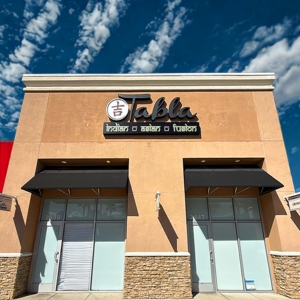
Have Questions About Tabla Franchise Opportunities?
Our Franchise Consultants are Here to Discuss How You Can Become a Part of the Tabla Family.