

Fine Dining Franchise: A Smart and Profitable Investment Opportunity
Most business professionals look at high-end hospitality and see organized disorder. They see volatile inventory, temperamental talent, and unpredictable shifts in public taste. Institutional capital looks at the same room and sees an entirely different equation, high margins, extreme customer loyalty, and an asset class that routinely resists inflation.
Investing in a fine dining franchise removes the operational guesswork from luxury food and beverage. It anchors the visceral appeal of a premium brand to rigid, repeatable systems. You are acquiring an enterprise playbook designed for scale.
Understanding the Fine Dining Franchise Model in Today’s Market
Luxury has shifted, people look forward to buy fewer things, but they spend aggressively on memories. A traditional eatery relies on sheer volume, turning tables three or four times a night just to break even. A fine dining franchise network maintains a highly disciplined approach to its operations.
Fewer tables, higher checks, and a deliberate pace minimizes physical depreciation on the property and its assets. You operate with a predictable supply chain for rare, premium ingredients, pre-negotiated vendor contracts, and a more manageable labor model.
Why Investors Are Turning Toward Fine Dining Franchise Opportunities
Independent restaurateurs spend a significant portion of their tenure managing crisis and miss out on long-term execution strategy. They haggle with linen suppliers, troubleshoot point-of-sale software, and worry about menu engineering. Franchising removes the guesswork.
Average Guest Spend: Premium diners spend up to three times more per reservation than casual restaurant patrons.
That margin changes the math of restaurant ownership. This operational architecture allows you to focus on the macro elements of the business: community integration, private event bookings, and long-term asset growth.
The Rise of the fine dining restaurant franchise Industry in the USA
The American culinary market is decoupling from corporate monotony. Diners in secondary and tertiary markets want the sophistication of Manhattan or San Francisco without the flight. Over the gradual years, this shift created a vacuum. A fine dining restaurant franchise can easily swoop in and bridge this gap. It delivers institutional credibility to cities hungry for upscale options, giving local operators the leverage of a national brand with the soul of a boutique establishment.
What Defines a modern fine dining franchise Experience
Traditional and formal dining tropes are observing a steep downward trend when tested with market relevance. The current era of luxury is relaxed, precise, and hyper-focused on detail. What does a modern fine dining franchise actually look like? It is the integration of lighting that adjusts automatically based on the time of sunset.
It is an acoustic design that allows a whisper to carry across a booth but prevents the next table from overhearing it. It is an open kitchen where the line cooks move with the synchronization of a ballet. The food must be exceptional, of course. But the hospitality is what brings people back.
Key Benefits of Investing in a Fine Dining Franchise
Here are some of the major benefits you can reap by investing in a fine dining franchise.
- You receive a blueprint for everything from kitchen layout optimization to sommelier training programs.
- Pre-negotiated vendor contracts that insulate you from inflation.
- Lower guest turnover, resulting in a highly predictable labor schedule.
- Access to proprietary guest relationship data that drives repeat bookings.
- The guesswork of high-end hospitality is gone. You inherit a refined machine.
Profit Potential of a Fine Dining Restaurant Franchise Business
During economic shifts, premium consumers rarely stop dining out; they simply become more selective about where they spend their time. The revenue model of a premium establishment operates on a completely different scale than standard eateries. Where casual restaurants rely on high volume and fast table turnover to protect thin margins, upscale concepts thrive on high average checks and intentional guest retention. A single cover here routinely commands three to four times the spend of a casual dinner.
The wine and beverage program alone fundamentally alters the balance sheet. Fine vintages and curated spirits carry massive margins, often accounting for nearly forty percent of total location revenue. A well-managed cellar doesn't just increase ticket sizes; it transforms your dining room into a regional destination for serious collectors and corporate entertaining. This loyalty-driven retention creates a highly predictable recurring revenue stream that insulates your capital.
Final Verdict
This is not a hands-off investment. It requires capital, sophistication, and a deep appreciation for the nuances of service. If you want a simple business that runs on autopilot, look elsewhere. But if you want to own the premier dining destination in your city, backed by an infrastructure designed to protect your capital, this model offers an unparalleled combination of prestige and profitability.
FAQs
What are the capital requirements for a fine dining restaurant franchise?
Liquidity requirements are higher than standard fast-casual concepts due to premium build-outs, high-end kitchen equipment, and extensive initial inventory like wine cellars. Specific numbers depend on the market and location size.
How do you maintain culinary quality across a modern fine dining franchise?
Through strict portion controls, centralized vendor sourcing, and extensive training programs provided by the corporate culinary team. The menu is standardized, but execution is localized.
What is the typical footprint for an upscale restaurant?
Most locations require between 5,000 and 8,000 square feet, ideally featuring space for private dining rooms, an expansive lounge area, and a high-capacity bar.

Vasu Kohli
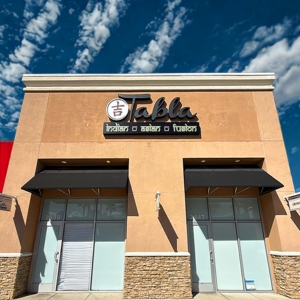
Vasu is a food and hospitality writer passionate about sharing the stories behind Tabla Indian Restaurant. Through engaging content, she highlights Tabla's authentic Indian cuisine, unique dining experiences, and commitment to exceptional hospitality, helping guests discover what makes every visit memorable. Beyond the dining room, Vasu also covers Tabla's growth as a franchise opportunity, breaking down what makes the brand a strong investment for prospective owners, from its proven culinary systems to its track record across multiple states.
★ Featured Posts

How Fast Casual Restaurant Concepts Help Entrepreneurs Build Successful Businesses
Discover how Fast Casual Restaurant Concepts help entrepreneurs achieve sustainable business growth through proven franchise systems, operational efficiency, and multiple revenue opportunities. Learn the advantages of investing in a modern fast casual franchise, key factors for long-term success, and what to consider before you own a fast casual restaurant that meets today’s evolving customer expectations.

Fine Dining Franchise or Independent Restaurant: Which Has Greater Growth Potential?
Discover the key differences between a Fine Dining Franchise and an independent restaurant. This guide explores growth potential, operational support, brand recognition, scalability, investment considerations, technology, and the challenges each business model faces, helping entrepreneurs choose the right path for long-term success in the restaurant industry.

How Fast-Casual Restaurant Franchises Are Transforming the Future of Dining
Learn what makes Fast Casual Restaurant Franchises one of the fastest-growing food business models. Explore key benefits, fast casual franchise opportunities, and Indian fast casual franchise potential.

How Indian QSR Franchises Are Transforming the Global Food Industry
The rise of Indian food express franchises is changing the restaurant industry by combining speed, consistency, and proven franchise systems for long-term business success.

What Makes Tabla Franchise a Strong Investment Opportunity for Entrepreneurs
Discover why entrepreneurs choose Tabla Franchise with scalable Fine Dining, Fast Casual, and Tabla Express (QSR) models, backed by a strong brand, comprehensive training, operational support, and long-term business growth potential.
✦︎ In the Spotlight
Tabla is Expanding!
NOW SERVING! YOUR NEW FAVORITE SPOT IS HERE!
Running Successfully
✔ Eden Prairie , MN
✔ CLERMONT , FL
Have Questions About Tabla Franchise Opportunities?
Our Franchise Consultants are Here to Discuss How You Can Become a Part of the Tabla Family.